

Bloat after the bottle. A crash by mid-afternoon. More and more athletes are tracing those everyday slumps back to an unlikely culprit: the very sports and energy drinks they reach for to fix them.
If you reach for a brightly colored sports drink after a workout, or crack an energy can to push through the afternoon, you've been told the same story for thirty years: this is the responsible choice. It replaces what you sweat out. It powers you through. It's the grown-up version of doing your body a favor.
So why do so many people feel worse an hour later?
Not dramatically worse. Just… off. A little bloated. A little foggy. That heavy, sloshy feeling in the stomach. The jittery spike that drops you into a crash by mid-afternoon. Most people shrug it off as "just how my body is." But a growing number of athletes, trainers, and gut-health-minded drinkers have started asking a more uncomfortable question.
What if the drink itself is the problem?
The ingredient list almost nobody reads
Flip over a typical sports or energy drink and you'll find a familiar cast: high-fructose sweeteners or a stack of artificial ones like sucralose, synthetic dyes, "natural flavors" that are anything but, and a sugar load that would make a dessert blush. Even the "zero sugar" versions lean hard on artificial sweeteners to keep the taste.
Here's the part the marketing skips. A meaningful and growing body of research has linked some artificial sweeteners to disruption of the gut microbiome, the trillions of bacteria that quietly run your digestion, your immune response, and a surprising amount of your daily energy and mood. When that ecosystem gets knocked off balance, the symptoms are exactly the vague ones people learn to ignore: bloating, irregularity, sluggishness, that "blah" feeling that no amount of hydration seems to fix.
In other words, the drink you bought to feel better may be working against the one system that decides how good you actually feel.
What the athletes figured out first
It usually starts with the people who can't afford to feel "off." Competitive athletes live and die by recovery. When something in their routine drags them down, they notice fast, and they cut it.
Quietly, a lot of them stopped reaching for the neon bottle. The reason they give is almost always the same: they wanted hydration and energy that didn't come with a gut tax. They wanted something they could drink right after training without the bloat. Something with real electrolytes, not a chemistry set.
What a lot of them landed on surprised even the skeptics. Not a powder. Not another zero-sugar can. Kombucha.
Not the mouth-puckering, vinegary stuff you've had before. A new category that a small Midwest company has spent more than a decade refining: a lightly carbonated sports kombucha built specifically for hydration, recovery, and daily performance, with the gut-supporting probiotics baked in instead of bred out.
It's called Kombuchade, and the founder's whole pitch is almost defiant in its simplicity: a sports drink that doesn't wreck your gut.
Why kombucha, and why this one is different
Kombucha has been prized for centuries for one reason: fermentation. The same natural process that gives it a gentle fizz also fills it with live probiotic cultures that support the gut microbiome. The catch is that most kombucha tastes like it (sharp, sour, vinegary), which is exactly why most people never get past their first sip, and why nobody chugs it after a hard workout.
Kombuchade's answer was to engineer the taste problem out without faking the contents. Lower carbonation. Far less of the vinegar bite. More real fruit and herb. The result, by the company's own description, is "the kombucha that doesn't taste like kombucha."
Then they did the thing the big sports drinks won't: they kept the ingredient list short enough to read out loud.
What's in the can
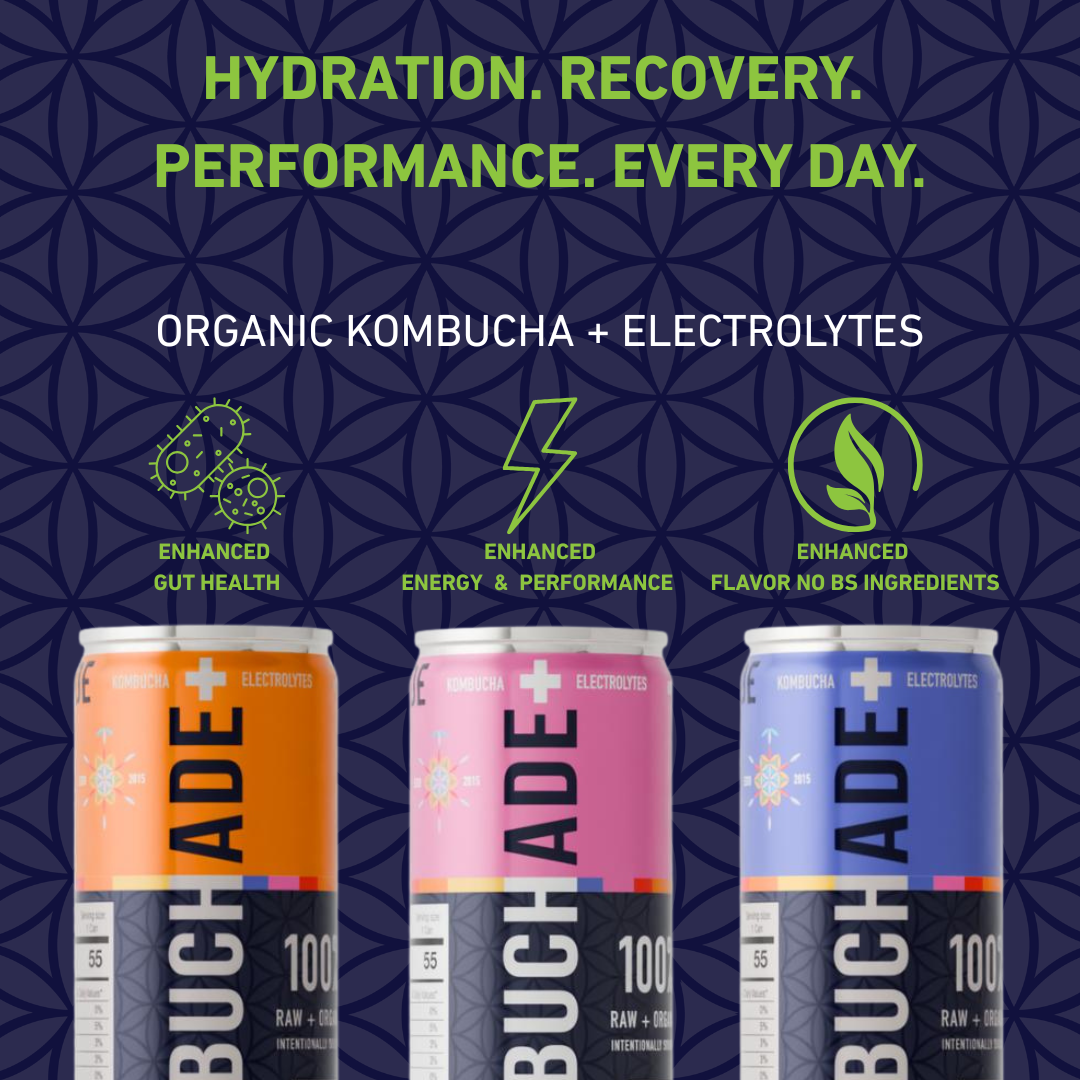
- Real electrolytes from Redmond's Real Salt, sodium-forward to actually support hydration
- Live probiotic cultures from genuine, slow fermentation
- Organic teas, herbs, and real fruit, never from concentrate
- 55 calories per can, with no added sugar after fermentation
- No artificial sweeteners. No stevia. No sucralose. No synthetic dyes.
- Caffeine-free, so the lift you feel comes from real hydration, not a stimulant you'll pay for later
- Organic & kosher
That last point matters more than it looks. The "energy" most drinks sell you is borrowed caffeine, and the crash is the interest. Kombuchade skips the loan entirely. The sugar that goes in is organic cane sugar, and the live cultures eat it during fermentation, which is how you end up with a genuinely low-sugar drink that still tastes like something you'd actually want.

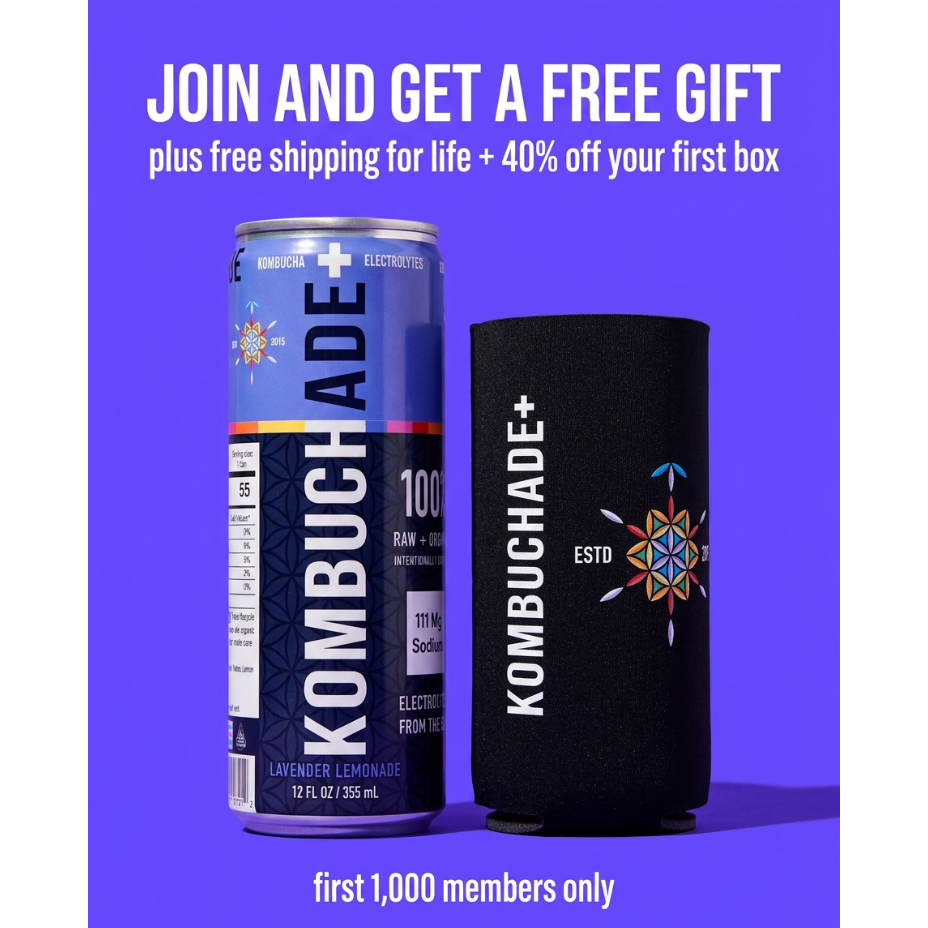
See the three flavors, the full label, and what 129 reviewers say, all on the official Kombuchade page.
See Kombuchade → Free shipping over $60 • 30-day money-back guaranteeThe part that surprises the skeptics
The most common review of Kombuchade isn't from a hardcore kombucha fan. It's from someone who was sure they'd hate it.
That pattern repeats across the reviews. People come for the clean label and stay for the way it makes them feel during the day, and just as importantly, the way it doesn't make them feel. The recurring phrases are telling: no bloat, no jitters, no crash, no cramps.
The people who fold it into a real training routine tend to describe it the same way an athlete describes a tool that works: unremarkable in the best sense. It just helps, and then they stop thinking about it.
Kombuchade vs. the neon bottle
| Kombuchade | Typical sports/energy drink | |
|---|---|---|
| Live gut-supporting probiotics | Yes | No |
| Artificial sweeteners (sucralose, etc.) | None | Common |
| Added sugar after fermentation | None | Often high |
| Real-salt electrolytes | Yes | Rare |
| That heavy, bloated finish | No | Often |
Based on label comparison. Individual results vary.
Not a startup gamble
It would be easy to file this under "trendy new wellness drink." The numbers say otherwise. Kombuchade is now stocked in 146 Life Time Fitness clubs nationwide, the kind of placement a brand only earns when the people who train for a living keep buying it. Its variety pack carries a 4.9-star average across 129 reviews, with 91% of them landing at five stars.
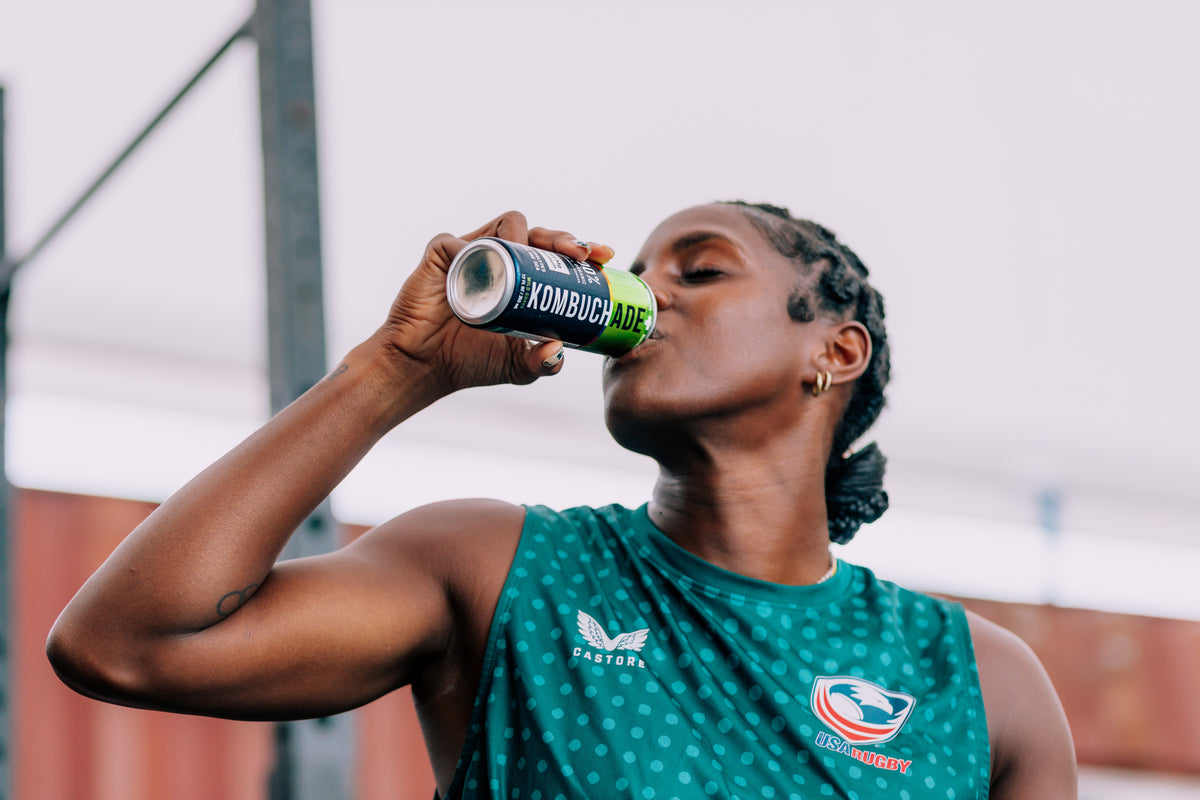
It's the kind of grassroots traction you can't buy: rugby players, runners, boxers, busy parents, a functional dietitian, even a first responder grabbing one to start a shift. Different lives, same reason: they wanted the upside of a sports drink without the downside they'd stopped noticing.
The easiest way to find out
If any of this sounds familiar (the bloat, the crash, the nagging sense that your "healthy" drink isn't doing you any favors), the honest answer is that you won't know until you feel the difference for yourself. Taste is personal, and so is the way your gut responds.
That's why most people start with the variety pack: all three flavors (Lavender Lemonade, Mango Turmeric, and Super Berry) so you can find the one you'll actually reach for. The Starter Pack runs $29.99, and there's a 30-day, no-questions-asked guarantee. If you don't love your first pack, it's on them.
Try all three flavors and feel the difference for yourself.
Light carbonation. Real electrolytes. No gut bomb.